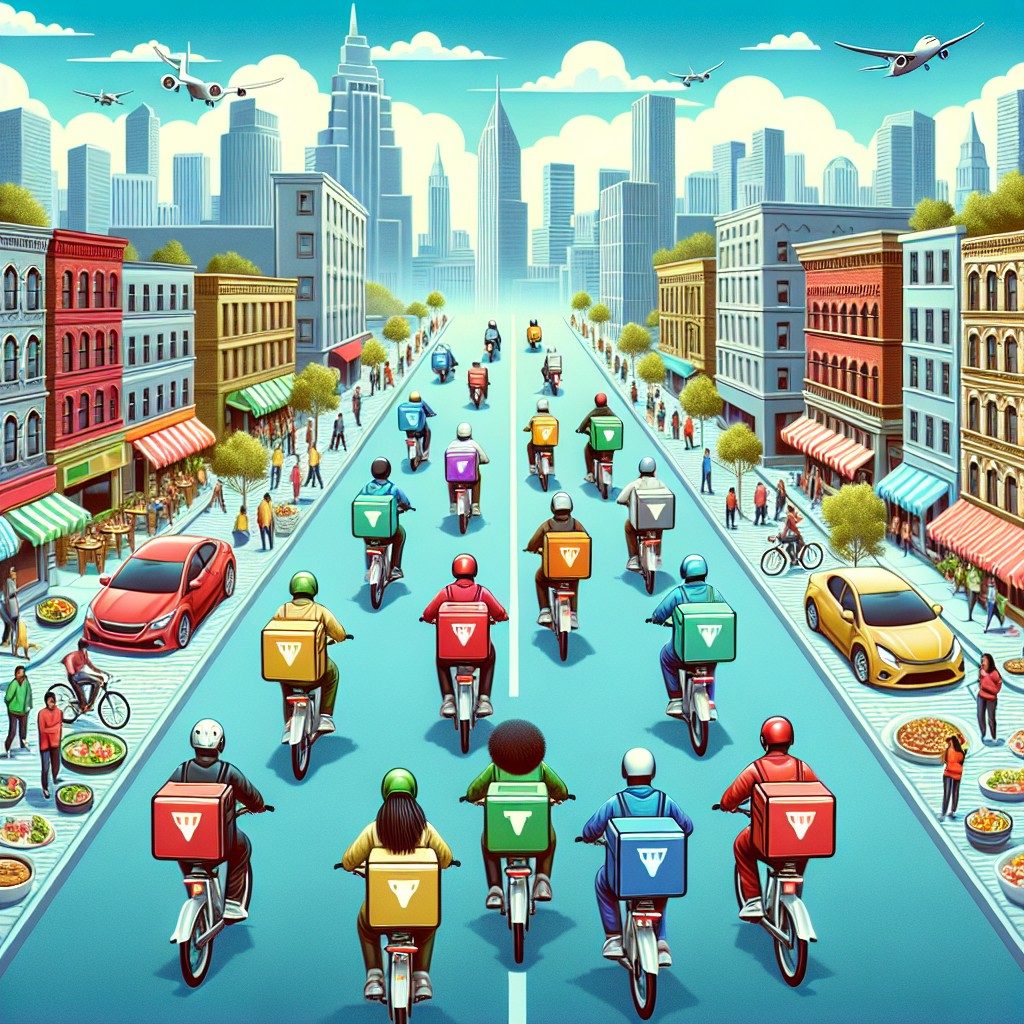
The food delivery market in Romania has seen significant growth in recent years, driven by changes in consumer behavior and technological advancements. This surge has intensified competition among providers, with considerable implications for both pricing strategies and the quality of services offered to consumers.
Evolution of the food delivery market in Romania
Romania’s food delivery sector has evolved from a niche service to a mainstream convenience within urban areas. The expansion of smartphone usage and internet penetration has made it easier for consumers to access a broad array of food options through various platforms. In addition, the COVID-19 pandemic accelerated this trend, pushing more consumers to adopt food delivery services for safety and convenience reasons. This growth attracted both local startups and international companies aiming to capitalize on the expanding market.
Key players and competition dynamics
The competitive landscape in Romanian food delivery is marked by the presence of prominent companies such as Glovo, Foodpanda, and Tazz by eMAG, alongside smaller local services. These players continuously innovate to differentiate themselves, offering diverse menus, faster delivery times, and loyalty programs. The rivalry encourages efficiency improvements and greater coverage in both large cities like Bucharest and Cluj-Napoca, as well as secondary urban centers. Such competition ensures consumers have multiple options, which in turn impacts pricing and service quality.
Impact of competition on pricing
Competition among food delivery companies in Romania exerts downward pressure on prices, often benefiting consumers. Providers frequently implement promotional offers, discounts, and free delivery periods to attract and retain customers. However, these price reductions are carefully balanced with the need to maintain profitability, especially given the operational costs such as delivery logistics and commissions paid to restaurants. Despite occasional price wars, the market remains sustainable due to the growing customer base and increasing order volumes.
Service quality improvements driven by rivalry
Service quality in the Romanian food delivery sector has improved due to the competitive environment. Companies invest in technology to optimize delivery routes, improve app interfaces, and enhance customer service. Additionally, the emphasis on timely deliveries, food safety, and packaging standards has increased. Consumers now expect not only affordable prices but also reliability and convenience, pushing companies to refine their services continually. Such advancements reflect global trends where excellent service quality acts as a key differentiator.
Challenges and future outlook
Despite its growth, Romania’s food delivery industry faces challenges such as regulatory constraints, fluctuating demand patterns, and labor issues related to delivery personnel. The competitive environment may intensify with the entrance of new digital platforms and potential consolidation among existing players. Nevertheless, the continued expansion of online food ordering, combined with improving infrastructure, suggests that Romanian consumers will benefit from more choices and increasingly competitive pricing. According to reports from credible international sources, such as BBC Business, competition is likely to drive further innovation in food delivery on a global scale, a trend that is reflected in Romania as well.
In summary, the food delivery market in Romania demonstrates how competition influences both price structures and service quality, resulting in tangible benefits for consumers. Continued market developments will be shaped by regulatory responses, consumer expectations, and technological advancements, with competition serving as a central force in shaping the industry’s evolution. For more comprehensive insights about the food delivery sector worldwide, organizations like the Statista Online Food Delivery page provide extensive data and analysis.
Frequently Asked Questions about food delivery
How has competition affected food delivery prices in Romania?
Competition has generally led to more competitive pricing in Romania’s food delivery market, with companies offering discounts and promotions to attract customers, thus benefiting consumers.
What are the main food delivery services operating in Romania?
The Romanian market features several key food delivery players, including Glovo, Foodpanda, and Tazz by eMAG, which compete to offer diverse menus and fast delivery.
Has service quality improved due to food delivery competition?
Yes, increased competition has prompted companies to invest in technology and customer service improvements, enhancing delivery speed, reliability, and food safety in Romania.
What challenges does the Romanian food delivery industry face?
Challenges include regulatory issues, managing delivery personnel, fluctuating demand, and maintaining profitability amid competitive pricing pressures.
What are the future prospects of food delivery in Romania?
The future looks promising with ongoing technological advancements and market expansion. Competition is expected to continue driving innovation and improved consumer experiences in Romania’s food delivery sector.